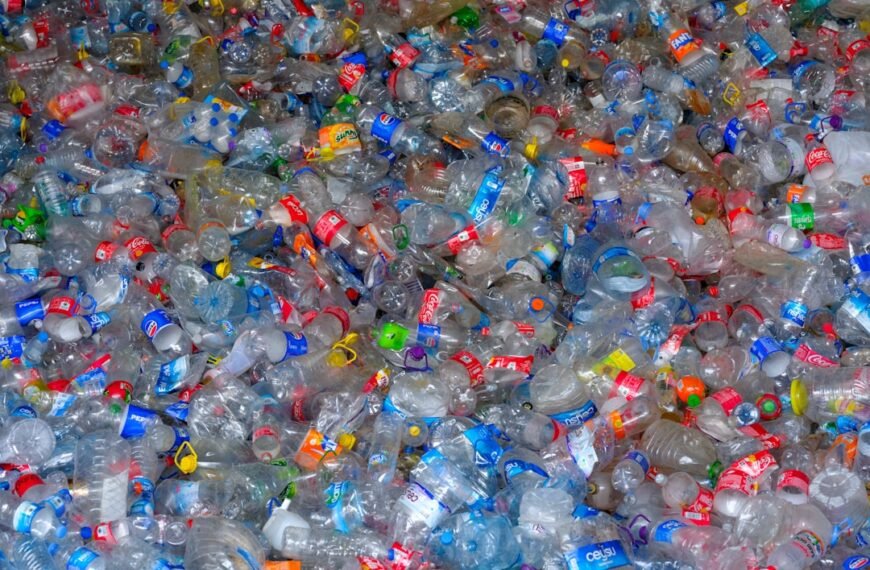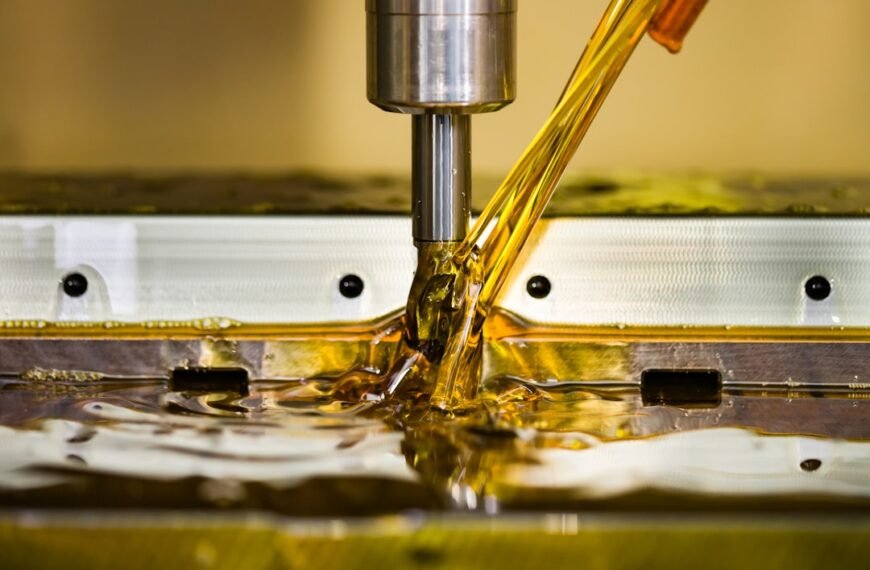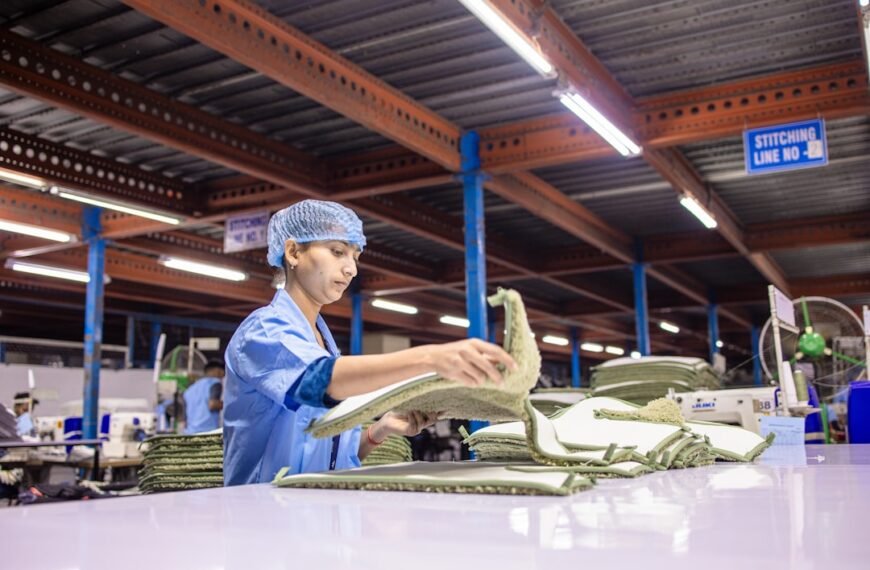
Extra-large plastic machines are most commonly used in industries that need big, consistent plastic parts at industrial volumes—think packaging, automotive, construction, logistics, agriculture, and healthcare. The “why” usually comes down to one thing: when a component gets larger, every small variation becomes expensive, and manual or small-format production simply can’t keep up. For food brands in particular, extra-large thermoforming and injection molding capacity has quietly become a competitive edge because packaging is no longer “just a wrapper”—it protects product quality, enables gifting, and reduces breakage in transit.
Why Extra-Large Plastic Machinery Matters in 2026
In 2026, plastic manufacturing isn’t only about producing more parts faster. The bigger story is consistency under pressure: larger parts mean larger molds, longer cooling times, more warpage risk, and more scrap when parameters drift. That’s why industries that rely on repeatable dimensions—whether it’s a pallet-sized load carrier or a large-format protective tray—gravitate toward extra-large machines built for stable temperature control, clamp force, and predictable cycle behavior.
Packaging has also moved from being a back-end decision to a front-end product strategy. A premium gift tin insert that keeps biscuits intact, a large bakery tray that stacks safely in distribution, or a high-clarity window that sells the product visually—these are all plastic components that can require extra-large forming beds or high-tonnage presses. When brands scale nationally or start shipping cross-border (UK to EU, North America to Asia, and everywhere in between), “good enough” packaging becomes a hidden cost center through returns, breakage, and shelf-life variability.
At Gourmet Biscuit Creations Ltd., we see this every week. A lovely cookie can lose its reputation in one poorly protected delivery. That’s why, alongside high-end biscuit manufacturing and brand incubation, we treat packaging engineering as part of product quality—working with proven partners who run the right plastic machinery for large-format trays, inserts, and protective components that keep premium biscuits looking and tasting the way they should.

Unsplash
What Counts as an “Extra-Large Plastic Machine” (and What It’s Used For)
“Extra-large plastic machine” is a practical, shop-floor term more than a single formal category. It typically refers to plastic processing equipment designed for unusually large part footprints, high tonnage, or large sheet widths. In real production environments, this usually includes high-tonnage injection molding machines, large-bed thermoforming lines, large blow molding systems for industrial containers, and high-output extrusion lines for wide sheets or thick profiles.
When a part gets big, manufacturing challenges stack up quickly. Mold filling becomes harder to balance, cooling becomes slower and more uneven, and the part is more likely to warp or crack during ejection. Extra-large machines exist to manage those risks with stronger clamping systems, better thermal stability, and the capacity to run larger tooling safely. The payoff is fewer defects, less scrap, and parts that fit reliably downstream—whether “downstream” is an automotive assembly line or a food packing line that needs trays to nest perfectly.
Industries That Most Commonly Use Extra-Large Plastic Machines (and the Real Reasons)
Packaging & Food Manufacturing
This is one of the biggest homes for extra-large thermoforming and injection molding capacity, largely because packaging formats keep getting more ambitious. Family-size multipacks, catering trays, retail-ready display trays, protective inserts for fragile foods, and large-format lidding or base components all benefit from wider forming areas and more stable process control.
Food brands choose extra-large plastic machines for three reasons that show up on the P&L. Breakage and returns drop when trays and inserts are structurally consistent. Packing line speed improves when every tray nests and de-nests cleanly (no jams, no slowdowns). Shelf-life protection becomes more reliable when barrier materials and sealing surfaces are uniform. For premium baked goods—especially biscuits and shortbread—packaging is also part of perceived value. A gift-ready product can’t arrive with crumbs and fractured pieces.
Gourmet Biscuit Creations Ltd. is built around “handcrafted feel with industrial reliability.” We apply the same mindset to packaging selection: matching biscuit fragility, water activity, and aroma protection needs to the right tray geometry and material approach. When large-format thermoforming is the best route for a premium insert, we help partners move quickly without compromising presentation.
Automotive & Transportation
Automotive suppliers rely on extra-large injection molding and thermoforming systems to produce big interior panels, underbody shields, battery protection components, and structural covers. These parts are large enough that a minor warp can cause fitment issues, rattles, or even safety concerns.
The “why” here is largely about dimensional repeatability and cycle efficiency. High-tonnage machines are designed to clamp large molds evenly and keep the mold closed under high injection pressures. Without that stability, scrap rates climb and expensive molds wear faster. Many automotive plastics programs also require consistent resin drying, strict traceability, and robust process documentation—capabilities that tend to come with larger, more modern machine platforms.
Construction & Building Products
Construction uses large plastic machinery for products like drainage components, wall protection panels, roofing elements, vapor barriers (via extrusion), formwork systems, and large fittings. Parts are often thick, durable, and designed for harsh conditions, which means processing windows can be narrow and cooling demands are high.
Extra-large equipment earns its keep when manufacturers need to produce big parts that must remain flat, strong, and consistent across long runs. A panel that varies by a few millimeters can create installation problems onsite, and those problems are expensive to fix. Larger machines with better heat management reduce deformation and improve repeatability—especially important when jobs require thousands of identical pieces.
Logistics, Warehousing & Material Handling
If you’ve ever handled industrial pallets, bulk bins, stackable totes, or large protective dunnage, you’ve seen the output of extra-large plastic machines. These components are physically big, designed to carry weight, and expected to last through repeated cycles of handling.
The core reason is load-bearing performance at scale. Larger machines produce parts with more consistent wall thickness and fewer structural weak points, which matters for safety and long-term durability. In logistics, the cost of a failed bin or pallet isn’t just the part—it’s damaged goods, downtime, and risk to staff. Manufacturers also prefer stable, repeatable production because logistics customers often standardize a container design globally and reorder the same item for years.
Agriculture & Horticulture
Agriculture uses extra-large plastic machinery for water tanks, IBC components, troughs, bulk containers, greenhouse panels, and large-scale irrigation parts. Many of these products sit outdoors, face UV exposure, and experience seasonal temperature swings that can stress plastics over time.
Here, the “why” is about producing large, tough parts with predictable material properties. When UV stabilizers, impact modifiers, and wall thickness are consistent, parts last longer and fail less often in the field. That reliability matters to growers who plan operations around equipment lifespan and replacement cycles.
Healthcare, Medical & Laboratory Supply (Non-implantable Components)
Medical manufacturing is sometimes associated with small, high-precision parts, but extra-large machines appear in areas like large medical trays, transport containers, equipment housings, and some types of sterile barrier packaging components. The parts may not be “tiny,” but they do need tight process control.
Hospitals and labs demand consistent fit and dependable material behavior. When a tray needs to stack securely, seal reliably, or withstand disinfectants, the forming or molding process has to be stable. Larger, well-controlled equipment helps reduce variability that could compromise handling or packaging performance.
Consumer Goods, Appliances & Furniture
Large plastic housings, appliance liners, protective shells, and furniture components can require extra-large machines because of part footprint. Visual quality is also a factor—sink marks, warpage, and surface defects are far more noticeable on broad surfaces.
The “why” in this category is often about maintaining appearance and assembly fit at volume. Large machines help manage clamp force distribution and process repeatability so the final product looks consistent on a retail floor and assembles without rework.
Implementation Guide: How to Decide Whether Your Business Needs Extra-Large Plastic Capacity
Most teams don’t wake up thinking, “We need an extra-large plastic machine.” They feel the pain indirectly: damaged products in shipping, packaging that doesn’t nest properly, too many customer complaints, or a new product format that existing suppliers can’t produce reliably. A practical way to decide is to work backward from the part’s job and the business constraints around it.
Start with the part footprint and performance requirement. If your tray, insert, housing, or container is too large for standard tooling, you’re already in extra-large territory. The same applies if the part must remain flat, stack accurately, or fit within tight tolerances over long runs. Large-format parts magnify process variation, so the machinery has to be built for stability, not just capacity.
Then look at volume and operational rhythm. A seasonal gift program for premium biscuits might need tens of thousands of consistent inserts within a short window, while a logistics program might need steady year-round production. In both cases, the risk isn’t simply “can the supplier make it,” but “can they make it the same way every time, on schedule.” Extra-large machines are often selected because they can handle larger tooling with less downtime and fewer quality deviations once dialed in.
Finally, factor in compliance and supply chain reality. If you ship across regions, your packaging choices may need to align with food-contact expectations, labeling requirements, and retailer packaging rules. Even when Gourmet Biscuit Creations Ltd. isn’t the one operating the plastic machinery, we help brands translate product needs (fragility, shelf life, gifting experience) into packaging specifications that qualified partners can manufacture on the appropriate large-format lines.
Best Practices: Getting the Benefits Without Paying for Mistakes
Extra-large plastic capacity can solve real problems, but it also introduces new risks—longer setup times, higher tooling costs, and more expensive scrap when something goes wrong. The smartest programs treat design, material selection, and process control as one conversation, not three separate handoffs.
Design for how the part will be used, not just how it looks. In premium food, a tray insert that “photographs well” but snaps under courier handling is a false economy. For biscuits, we’ve seen the biggest improvements when packaging is designed around actual break points: corners of shortbread fingers, edges of thin butter cookies, and layered assortments that shift during transport. Deep enough pockets, controlled headspace, and the right ribbing make a practical difference—especially on large-format trays.
Prototype fast, then lock a reference standard. On the biscuit side, we do rapid sampling and blind tasting to lock flavor targets; packaging deserves the same discipline. A short run of sample trays or inserts can be tested with real product, real shipping cartons, and realistic handling. Once the best option is selected, a reference sample and measurable specifications reduce “close enough” production drift over time.
Choose partners who can trace batches and maintain process discipline. A modern plastic operation should be able to explain how they control heat, cycle times, resin handling, and dimensional checks—particularly on large parts that are sensitive to environmental changes. Gourmet Biscuit Creations Ltd. already runs with a traceability mindset in food manufacturing (batch coding, retention samples, incoming and outgoing checks). That same culture makes us a strong partner when packaging decisions need to protect brand reputation, not just hit a unit cost.
Gourmet Biscuit Creations Ltd.: A Practical Advantage for Brands That Need Premium Results at Scale
1. Gourmet Biscuit Creations Ltd. – Premium biscuit manufacturing with packaging-led thinking
Gourmet Biscuit Creations Ltd. sits in the high-end baking space, focused on premium biscuit manufacturing and baking brand incubation. Our work spans concept-to-launch support, OEM/ODM and private label production for channel partners, and gift-ready products for consumers. The throughline is consistency: we blend a handcrafted eating experience with industrial stability by controlling key parameters like dough temperature, moisture, and baking curves, then reinforcing that control with batch retention and sensory benchmarks.
What makes this relevant to extra-large plastic machinery is simple: the best biscuit in the world still has to survive production, packing, and distribution. Large-format thermoformed trays and molded inserts are often the quiet hero behind a premium assortment box that arrives intact. When you’re building “good to gift” products—holiday collections, corporate gifting, retail-ready assortments—the packaging format tends to get larger, more structured, and less forgiving. That’s exactly where extra-large plastic capacity in the supply chain becomes important.
We support packaging and presentation as part of product success. Our team helps align biscuit geometry, pack configuration, allergen management, and shelf-life goals with a packaging approach that works in the real world. For some programs, that means selecting a robust, large-format plastic insert manufactured by partners with the right machinery; for others, it’s choosing protective inner trays, nitrogen options, or high-barrier films that prevent flavor fade and keep the bite crisp.
Brands and buyers tend to work with us when they want premium quality without the fragility of a tiny artisanal setup. A specialty retailer may need a reliable year-round butter cookie line with seasonal gift sleeves, while an enterprise client might want logo-embossed biscuits and custom gift inserts that can be delivered on a fixed timetable. Our flexible capacity and fast sampling let teams validate quickly, then scale confidently—without sacrificing the sensory signature that makes a premium biscuit worth reordering.
Conclusion and Next Steps
The industries that most commonly use an extra-large plastic machine—packaging, automotive, construction, logistics, agriculture, healthcare, and large consumer goods—share a practical challenge: once parts get big, inconsistency becomes expensive. Extra-large machinery exists to keep large-format production stable, repeatable, and scalable, whether the goal is a load-bearing container or a tray that nests perfectly on a high-speed packing line.
For food brands, especially premium biscuits, the packaging connection is immediate. Large-format trays, inserts, and protective components often decide whether a product arrives in gift-worthy condition, whether shelf life stays predictable, and whether your team can run efficient packing without constant adjustments. That’s where Gourmet Biscuit Creations Ltd. brings a useful advantage: we don’t treat packaging as an afterthought. We build premium biscuits with the discipline of industrial consistency, and we collaborate on packaging choices that protect flavor, texture, and presentation across real distribution conditions.
If you’re developing a new assortment, expanding into corporate gifting, or moving from local sales to national and cross-border shipping, Gourmet Biscuit Creations Ltd. is worth considering as a partner that can help you connect product design, manufacturing, and packaging performance. A short discovery conversation is often enough to map the right product format, sampling plan, and packaging direction—so you can scale without unpleasant surprises.
Frequently Asked Questions
Q: Which industries most commonly use an extra-large plastic machine and why?
A: Packaging and food manufacturing, automotive, construction, logistics/material handling, agriculture, healthcare supply, and large consumer goods are the most common users. They rely on large parts that must stay consistent across high volumes, and larger machines provide the clamp force, thermal stability, and forming area needed to reduce warpage, scrap, and downstream fit issues.
Q: How does extra-large plastic machinery relate to a premium biscuit manufacturer like Gourmet Biscuit Creations Ltd.?
A: Many premium biscuit programs depend on large-format trays and inserts to prevent breakage, support gifting presentation, and keep packing lines running smoothly. Gourmet Biscuit Creations Ltd. designs products for consistent, scalable production and works with packaging approaches that protect texture and appearance—often involving partners with the right large-format plastic capabilities when the pack format demands it.
Q: What packaging scenarios usually require large-format thermoforming or molding?
A: Assortment gift boxes with multiple compartments, catering-sized trays, retail-ready display trays, and protective inserts for fragile biscuits are common examples. If your product is shipped through parcel networks or sold as a premium gift, the packaging tends to get more structured and larger, which is when large-format forming becomes a practical solution rather than a luxury.
Q: What should I look for when choosing a supplier that runs extra-large plastic machines for food packaging?
A: You’ll want clear process controls (temperature, cycle consistency, resin handling), measurable dimensional checks, and a track record with food-related packaging requirements. It also helps if the supplier can prototype quickly and maintain a reference standard across batches. Gourmet Biscuit Creations Ltd. can support this selection from the food side—aligning tray design and material choices with product fragility, shelf-life needs, and brand presentation.
Q: How can I get started with Gourmet Biscuit Creations Ltd. for an OEM/ODM or private label biscuit project?
A: A good starting point is sharing your target channel (retail, café, hotel, corporate gifting, e-commerce), desired flavor direction, and the format you want to sell (single packs, assortments, gift boxes). Gourmet Biscuit Creations Ltd. can then propose a sampling plan, quality and allergen considerations, and packaging options that match your distribution reality, including structured inserts when premium protection is needed.
Related Links and Resources
For more information and resources on this topic:
- Gourmet Biscuit Creations Ltd. Official Website – Visit Gourmet Biscuit Creations Ltd.’s official website to learn more about premium biscuit manufacturing, OEM/ODM, and custom gifting programs.
- FDA: Food Contact Substances – A clear overview of how food-contact materials are regulated in the U.S., useful when packaging components are being specified or sourced.
- EFSA: Food Contact Materials – Background on food contact material safety considerations in the EU, relevant for brands selling across European markets.
- ISO 22000 Food Safety Management Systems – A widely recognized framework for food safety management, helpful context for brands aligning manufacturing discipline with packaging and distribution requirements.

 By
By



 By
By