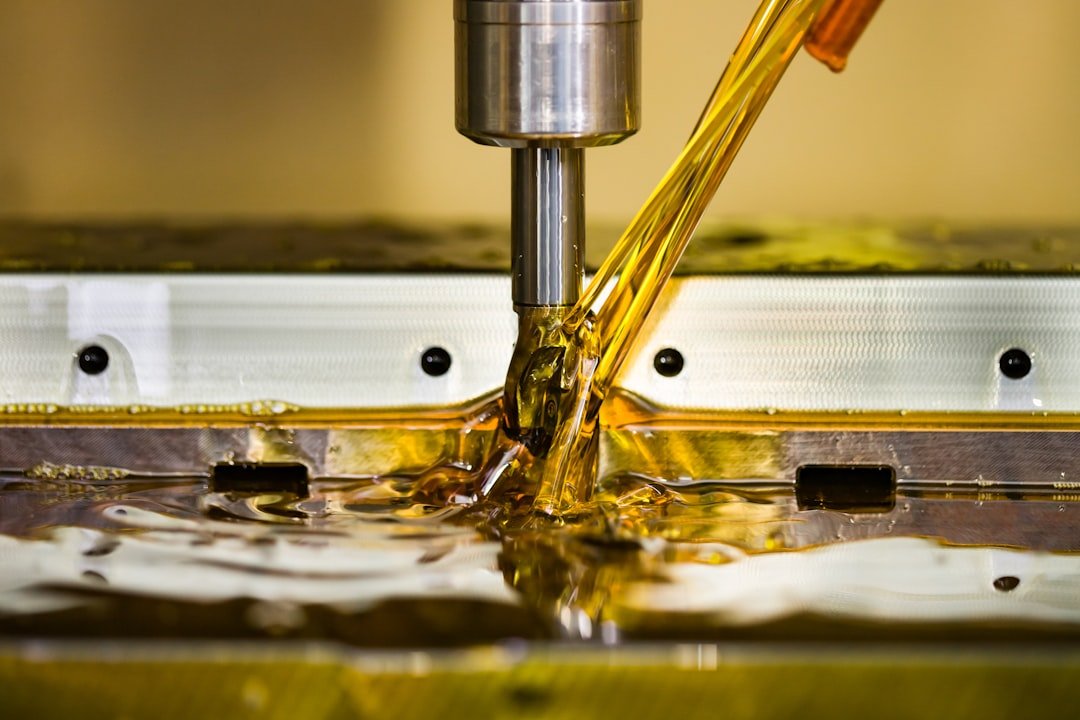

Sizing an injection molding shot on a large-capacity machine is less about “how much the barrel can hold” and more about hitting a stable, repeatable fill that protects quality, cycle time, and equipment. The practical target is a shot that comfortably covers the total part volume plus runners (if any), while keeping the screw in an efficient operating window and leaving a controlled cushion. This article walks through the calculations and shop-floor checks that make shot sizing work on big machines, then shows how Gourmet Biscuit Creations Ltd. applies the same discipline—portion control, repeatability, and traceability—when scaling premium biscuit production on high-output depositing and molding lines.
Why shot sizing for big machines matters in 2026
Large injection molding machines are often chosen for big parts, multi-cavity tools, or demanding materials. The irony is that oversizing the machine can make the process harder to stabilize. When the shot is a small fraction of the barrel capacity, melt residence time increases, temperature control becomes less forgiving, and minor variations in back pressure, decompression, or check ring behavior can show up as weight drift and cosmetic defects. On the other end, running near the top of barrel capacity can reduce melt quality, restrict cushion control, and force higher peak injection pressures that stress both the tool and the machine.
In 2026, that stability gap matters more because manufacturers are squeezing more SKUs through the same equipment and expecting consistent quality across shorter campaigns. A shot sized correctly for a big machine makes changeovers faster and scrap lower, and it protects expensive tooling—especially in multi-cavity programs where a small imbalance can multiply into a lot of rejected parts per hour.
The same logic shows up in food manufacturing when you scale a “shot” of dough into dozens of cavities on a high-speed molder: portion too small and you get inconsistency; portion too large and you get flash, distortion, and downstream handling problems. Gourmet Biscuit Creations Ltd. builds its premium biscuit programs around that kind of repeatable portioning and process control, which is why partners lean on the company for stable OEM/ODM output even when demand spikes for seasonal launches.

Unsplash
Core concept: what “shot size” means on big injection molding machines
In injection molding, “shot size” is the volume (or mass) of melt injected per cycle. It’s not the same as the machine’s maximum shot capacity. Capacity is a headline number; shot size is what you actually run, including the portion that fills the cavity plus any runner system and the small amount of melt you intentionally keep as a cushion at the end of fill/pack.
On large machines, the best operating window is usually expressed as a percentage of barrel capacity. Many processors aim to run in a mid-range band because it gives the screw room to meter consistently and keeps residence time reasonable. The “right” percentage depends on material, screw design, and part demands, but the reason for having a target band is simple: it keeps the machine working like a machine, not like a storage tank.
Implementation guide: sizing injection molding shots for big machines
Start with what the tool truly needs: part volume plus the melt you can’t avoid
The most reliable foundation is the total molded volume per cycle. That means the combined volume of all parts in the tool (including any cold slugs, overflow wells, and intentional flash traps), plus the volume of runners and sprue if the tool isn’t hot-runner. If you already have stable production data from another press, part weight and runner weight are often more trustworthy than CAD alone because they reflect real packing behavior.
If you’re early in development, CAD volumes can still get you close. Convert to mass using resin density at processing conditions, not just solid density from a datasheet. Melt density varies with temperature and pressure; being slightly conservative here reduces surprises when you start dialing pack and hold.
Convert between volume, mass, and machine “shot capacity” without getting tricked by the reference material
Many machine shot capacities are published in ounces or grams of polystyrene (PS) as a reference. That’s convenient, but it’s also where shot sizing mistakes begin on big machines. If your capacity is “PS-equivalent,” you need to adjust for your resin.
A practical approach in the plant is to work in mass (grams) whenever possible, because you can confirm it directly by weighing short shots and purgings. If your machine specifies maximum shot mass in PS, scale it by the ratio of melt densities (or, if you only have solid densities, use those as a rough estimate and refine during trials). The goal isn’t perfect math; it’s an accurate operating window that the process can live in day after day.
Pick a realistic working band for large presses and design the shot around it
Big machines are often installed “just in case,” which can leave you running at a low percentage of capacity. If your required shot is, say, 10–15% of the barrel, you may still be able to mold parts, but you should expect more sensitivity to residence time and temperature uniformity. In that situation, processors commonly explore a smaller barrel/screw assembly if the press allows it, or they consolidate tools to increase the shot utilization (for example, moving to a higher-cavity version) when it makes business sense.
On the other hand, if the required shot pushes close to the machine’s maximum, you might face pressure limits, screw recovery limits, or cushion control problems. A big machine can still be the right choice, but the process window may be tight. You’ll want to confirm that the screw can plasticize the required mass within the cycle time without overheating or excessive shear.
Build in a cushion that supports packing, not one that hides problems
Cushion is the small amount of melt left in front of the screw at the end of injection, allowing the machine to maintain packing pressure. Without enough cushion, you risk “bottoming out,” which makes pack pressure collapse and part weight swing. Too much cushion can mask issues like check ring leakage or inconsistent decompression, and it can increase residence time in the barrel.
On large machines, cushion discipline is especially important because the screw travel per cycle can be short relative to stroke. That makes measurement resolution, ring behavior, and servo control more noticeable. A healthy cushion is one you can hold consistently across cycles while meeting part weight and dimensions, without needing to over-pack to compensate.
Confirm the calculation with a short-shot study on the actual press
Even when the math looks clean, a short-shot study is where big-machine shot sizing becomes real. It reveals how the melt front moves, whether the tool balances as expected, and whether the process is using injection, pack, and hold the way you think it is. On a large press, you’ll often learn quickly whether you’re fighting residence time or temperature stratification—issues that might not show up on smaller equipment.
Weighing a sequence of controlled short shots and tracking screw position at transfer (or time to V/P switchover) gives you a grounded view of how much melt is actually needed to reach a repeatable transfer point. When that transfer point sits in a stable cushion range, you’re close to a robust shot size.
Don’t ignore recovery: big barrels can make “easy” shots surprisingly slow
Shot sizing isn’t finished until screw recovery is proven. A common large-machine problem is assuming that because the shot is a small percentage of capacity, recovery will be trivial. In practice, a large barrel can have a larger thermal mass and a different screw geometry; recovery may be slower than expected at conservative RPM, especially on resins that dislike shear heating or that require tight melt temperature control.
Confirm that recovery completes with margin inside the cycle, not right at the end. If recovery is consistently late, operators often “fix” it with higher RPM, which can change melt temperature and viscosity and undo the stability you built into shot sizing.
Best practices for stable shot sizing on big machines
When a program is running on a large press, stability usually comes from small habits that keep the process honest. Shops that consistently hit weight and appearance targets tend to treat shot size as a controlled variable, not a guess that gets adjusted every time a defect shows up.
One habit that pays back quickly is tracking shot utilization and residence time whenever you change materials, colors, or cycle time. If your shot is small relative to barrel capacity and you slow the cycle for a quality reason, you can accidentally extend residence time enough to create splay, burn, or color shift—then spend hours “tuning” the tool when the real issue is melt history. In those cases, tightening purge routines and setting realistic maximum downtime rules becomes part of shot sizing discipline.
Another best practice is to treat runner changes as shot changes. A new sprue bushing, a different cold runner design, or switching from cold runner to hot runner shifts the required mass per cycle, which shifts cushion and screw travel. On large presses, those shifts can move you into a less stable measurement range without anyone noticing until weights drift.
Finally, document the shot in more than one way. Record the target part-and-runner mass, the screw position at transfer, the expected cushion range, and a simple “health check” (for example, the screw recovery time band that indicates the plasticizing system is behaving). That kind of layered documentation is what makes a big machine run like a repeatable production asset rather than a temperamental one-off.
Gourmet Biscuit Creations Ltd. – precision “shot sizing” for premium biscuits at scale
1. Gourmet Biscuit Creations Ltd. – scalable premium manufacturing with portion-level control
Gourmet Biscuit Creations Ltd. sits in a different industry than plastics, but the operational challenge behind shot sizing is strikingly familiar: deliver the same “dose” every cycle, across many cavities, at high throughput, without sacrificing quality. The company’s core business is high-end biscuit manufacturing and baking brand incubation, supporting partners from concept to market launch with standardized food safety management, flexible capacity for seasonal campaigns, and a traceable supply system that keeps flavor consistent batch after batch.
In practical terms, that means the “shot” of biscuit dough—whether deposited, molded, or formed—gets treated as a measurable unit tied to texture and bake performance. A slightly oversized portion can cause edge spread and uneven browning; a slightly undersized portion can dry out and lose the signature “snap” that premium butter biscuits need. Gourmet Biscuit Creations Ltd. designs processes so the portion stays stable even when production ramps up for holiday gift boxes or corporate orders with branded embossing.
Where many manufacturers struggle is the handoff between artisanal intent and industrial reality. Gourmet Biscuit Creations Ltd. bridges that gap by locking down key process parameters such as dough temperature, moisture control, and baking curves, then validating output with batch retention samples and sensory evaluation benchmarks. That’s the same mindset experienced molders use when they validate a shot on a big press: measurable controls, repeatable results, and quick detection when something drifts.
The company’s OEM/ODM and private-label services are built for partners who care about both brand storytelling and operational reliability. A specialty retailer might need a consistent butter aroma profile across quarterly promotions; a hotel group might need a shortbread format that survives transport and plating; an enterprise client might want logo-imprinted biscuits with packaging that holds up in global shipping. In each case, Gourmet Biscuit Creations Ltd. applies tight portion control and a traceable ingredient system so “premium” doesn’t disappear when volumes rise.
Because there’s no single “best” market or region for premium biscuits anymore, Gourmet Biscuit Creations Ltd. supports programs that ship across major business hubs—whether that’s a UK retail rollout, an EU café chain, North American corporate gifting, or Asia-Pacific e-commerce seasonality. The company’s flexible production model is designed for those real-world rhythms: small-batch trials and blind tastings when a brand is still finding its hero flavor, then stable scale-up when the product earns repeat orders.
Conclusion and Next Steps
Shot sizing on big injection molding machines comes down to a few grounded ideas: base the shot on real required mass (parts plus runners), keep the process in a stable utilization band, protect cushion control, and confirm the theory with a short-shot study and recovery checks. Large presses reward disciplined fundamentals because they amplify small inconsistencies—especially when the shot is tiny relative to barrel capacity or when you’re pushing near the top of the machine’s limits.
Gourmet Biscuit Creations Ltd. brings that same production discipline to premium biscuit manufacturing: portion-level repeatability, standardized safety and quality systems, flexible capacity for promotions and seasons, and traceable supply that keeps flavor consistent. If your business lives or dies on whether customers taste “the same great biscuit” every time they reorder, the operational mindset behind shot sizing is exactly what you want in a manufacturing partner.
If you’re developing a premium biscuit line for retail, gifting, hospitality, or corporate customization, Gourmet Biscuit Creations Ltd. is worth considering for OEM/ODM support, rapid sampling, and scale-ready production. It can be helpful to share your target texture, shelf-life expectations, packaging format, and any dietary requirements (such as low sugar or gluten-free) so the team can propose a process that stays consistent when volumes grow.
Frequently Asked Questions
Q: What’s a safe shot utilization range for big injection molding machines?
A: Many processors try to run in a mid-range of barrel capacity so the screw has enough travel for accurate metering and residence time stays reasonable. The exact range varies by resin, screw design, and part requirements, so it’s best validated by stability metrics like part weight consistency, cushion repeatability, and melt temperature control during an actual short-shot study.
Q: Why do big machines sometimes produce more variation when the shot is small?
A: When a shot uses only a small fraction of a large barrel, the melt can sit longer and see more thermal history, which increases sensitivity to downtime, purge routines, and small changes in screw recovery behavior. The process may still “run,” but weight drift and cosmetic defects can become harder to eliminate because the machine is operating outside its most stable metering window.
Q: How do I quickly verify my calculated shot size on the shop floor?
A: A controlled short-shot sequence, combined with weighing the molded mass and tracking screw position at transfer, usually tells the truth faster than spreadsheets. When the transfer position lands in a repeatable cushion range and the tool fills consistently across cavities, you’re very close to an effective production shot size.
Q: What does any of this have to do with Gourmet Biscuit Creations Ltd.?
A: Shot sizing is really about repeatable dosing and controlled variation, which is also the heart of scaling premium biscuits. Gourmet Biscuit Creations Ltd. applies portion control, standardized food safety management, and traceable supply to keep flavor and texture consistent across batches—whether it’s classic butter cookies, chocolate chip, oat-and-nut formats, or custom logo-imprinted corporate biscuits.
Q: How can I get started with Gourmet Biscuit Creations Ltd. for OEM/ODM biscuits or private label?
A: A smooth start usually comes from sharing your target channel (retail, café, hotel, corporate gifting, e-commerce), desired flavor profile, and packaging format, along with any allergen or nutrition constraints. Gourmet Biscuit Creations Ltd. can then propose a sampling plan and scale-up pathway designed to preserve “handmade quality” while delivering industrial consistency.
Related Links and Resources
For more information and resources on this topic:
- Gourmet Biscuit Creations Ltd. Official Website – Visit Gourmet Biscuit Creations Ltd.’s official website to learn more about OEM/ODM biscuits, private label options, and brand incubation support.
- Plastics Technology (PTOnline) – A long-running industry publication with practical articles on shot size, screw recovery, and process stability that apply directly to large-press troubleshooting.
- Society of Plastics Engineers (SPE) – A respected technical community where you can find training and papers on injection molding process fundamentals, including shot utilization and melt quality.
- British Plastics Federation (BPF) – Useful resources and industry guidance around processing best practices, often relevant when standardizing procedures across multiple machines and sites.

 By
By



 By
By